Category Archives: Uncategorized

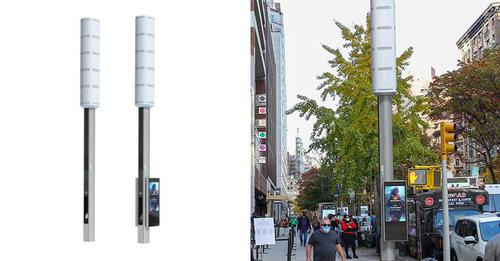
3-Story-Tall 5G Tower Proposed for 771 Greenwich St.

image courtesy of Village Preservation

More 3-story-tall 5G cellular towers are planned for our community! Boldyn Networks recently submitted an application for the tower at 771 Greenwich Street (at the southeast corner of Greenwich and Bethune streets, directly adjacent to the building at 99 Bank Street). This location is within the Greenwich Village Historic District.

Want to stop it? This tower is currently undergoing a “Section 106 review” to determine if it will have a negative impact on the surrounding historic district. You can help. Click below and send a comment to the review today! (There’s a separate review for each 5G tower, so you need to send a separate comment for each tower.)

The deadline for comments on the 771 Greenwich Street tower is December 26. The public can submit comments by sending an email to:
citybridgelink5g@ebiconsulting.com

Village Preservation has suggestions for comments along with an optional form you can use if you wish (the form needs to be sent to the same citybridgelink5g@ebiconsulting.com address):
https://www.villagepreservation.org/oppose-a-5g-tower-at-771-greenwich-street-99-bank-street/

In addition to the language suggested by Village Preservation, I’d urge that you include a sentence stating that these towers should not be allowed anywhere within or adjoining our historic districts.

Boldyn has also just submitted an application for the tower at 100 Horatio Street. This is a tower we’re particularly concerned about; stay tuned for more information.

Fight Over 3-Story-Tall 5G Towers Heats Up: Tower Proposed at 445 West St.

image: Village Preservation

The fight over the multiple futuristic 3-story-tall LinkNYC 5G towers planned for our community is heating up again.

Last July, the city-wide review that was supposed to evaluate the towers’ impacts on neighboring historic districts was “paused” by the FCC because of the chaotic way it was being conducted by the applicant (a company currently named Boldyn Networks, previously known as CityBridge and ZenFi). That review, called a Section 106 review, has now restarted.

An application was recently filed for 445 West Street (southeast corner of Bethune Street and West Street), and we have received notices that applications will be filed soon for 100 Horatio Street (southwest corner of Horatio and Washington streets), 100 Jane Street (actually at the northwest corner of West 12th and Washington streets), and 771 Greenwich Street (southeast corner of Greenwich and Bethune streets). Applications for a tower near Jane and Greenwich streets and another tower near Gansevoort and West streets are also in the works. All of these locations are either within or directly adjacent to historic districts.

Save Gansevoort has been designated a “consulting party” to these reviews, and we have already filed a comment objecting to the proposed tower at 445 West Street. This tower is immediately adjacent to Westbeth, and violates a clause in Boldyn’s contract with New York CIty that states towers cannot be placed next to individual landmarks such as Westbeth.

It’s now possible for the general public to comment as well by sending an email to:
citybridgelink5g@ebiconsulting.com The deadline for submitting comments on the tower at 445 West Street is November 26th. Comments must relate only to the impacts of the proposed tower on the historic buildings and districts; it you raise any concerns unrelated to historic preservation your comment may be ignored or discarded. In the subject header, include “Section 106 review of tower at 445 West Street.”

In your message, make two points;

  1. The proposed tower at 445 West Street directly adjoins Westbeth, an individual landmark. This tower would violate Boldyn’s contract with New York City, which prohibits LinkNYC 5G towers adjacent to individual landmarks.
  2. This prohibition recognizes that these futuristic 3-story-tall 5G towers are incompatible with landmarked properties and would have negative impacts on such properties. Because of their size and design these towers will inevitably have a negative impact on designated historic districts, and should not be allowed within or adjoining such districts.

We’ll post more information as soon as proposals are officially submitted for the other 5G towers proposed for our area.

FCC Says LinkNYC 5G Towers Must Be Reviewed for Impacts on Historic Districts and Landmarks

There’s some big news about the LinkNYC 5G towers. Seven of these futuristic three-story-tall towers are currently planned for the West Village, with more to come. In early February the City poured footings for two 5G towers on Washington street, one on Horatio and the other on West 12th. City Councilmember Erik Bottcher’s office was able to get the city to put a temporary halt on construction, but last month we were told by his office that the city was likely to resume construction at any time.

However, a few weeks ago we heard about another issue that had the potential to stop construction. Section 106 of the National Historic Preservation Act requires a review of any project funded or licensed by a Federal Agency that is in or adjacent to a historic structure (or district) that’s listed on the National Register of Historic Places. The purpose is to determine if the project will have a negative impact on that historic district or landmark. The 5G towers are licensed by the FCC, and both Washington Street towers are within 50 feet of a historic district listed on the National Register (the one at the corner of Horatio and Washington actually adjoins two historic districts). All the other towers currently proposed for the West Village are also in historic districts or adjacent to an individual landmark.

Yet it turns out that a Section 106 review was never conducted. The FCC, as the federal agency, has a legal obligation to ensure the requirements of Section 106 review are met, and the NY State Historic Preservation Office (SHPO) would be the agency that administer the review. Save Gansevoort and other preservation organizations sent multiple letters to the FCC, SHPO, and our elected officials asking for a review. In our letters, Save Gansevoort specifically pointed out that construction of the Washington Street 5G towers had already begun, in apparent violation of the Section 106 regulations. Significantly, ten days ago Congressman Jerry Nadler sent the FCC a letter asking that they conduct a review.

Last Thursday, the FCC notified CityBridge (the franchisee that is building and operating the towers) that a Section 106 review is required and that no construction should occur until the review is completed. The order applies to all the LinkNYC 5G towers in the entire city, so this is a big deal. A word of caution: the FCC wants this project to move ahead, and SHPO may not be eager to court controversy. So we will have our work cut out for us.

Stay tuned…

Opposition Grows to 5G Towers in West Village

Concrete was poured yesterday to build a footing for the LinkNYC 5G tower at the southwest corner of Horatio and Washington Streets (100 Horatio Street). A footing was constructed two days ago for the tower at “100 Jane Street” (actually located at the northwest corner of West 12th Street and Washington Street).

It is outrageous that this is happening only two weeks after the New York City Office of Technology and Innovation told Community Board 2 that it was still accepting comments on these towers;  two weeks is obviously completely insufficient to evaluate comments and make any necessary changes.  In fact, given the time required to survey the sites and schedule work crews, it seems likely that the decision to proceed with these towers was made before the Community Board hearing even occurred. OTI and CityBridge are ignoring both the resolution that CB2 passed two weeks ago asking for a moratorium on these towers, and the letter sent by Borough President Levine asking that installation be slowed in residential areas.

Update: the Village Sun has published an detailed article about pushback in the West Village after construction started on these two 3-story-tall 5G towers. Construction has been temporarily halted due to community pressure, but could resume at any time.

3-Story-Tall 5G Towers in the West Village?!

A private company called CityBridge is planning to install seven 3-STORY-TALL 5G antenna towers in the Far West Village. These things are huge, ugly, and many will have large illuminated advertising signs. All the towers will be in historic districts, or immediately adjacent to historic districts or individual landmarks. The planned locations are 100 Horatio St., 820 Greenwich St., 771 Greenwich S., 100 Jane St. (actually at the corner of W. 12th and Washington), 445 West St., 113 Horatio St., and 108 Gansevoort St. We are investigating the options for fighting these monstrosities.

The Final, Official Gansevoort Deal

photo: Wally Gobetz

Earlier this year, the City Council approved office use at Aurora’s Gansevoort site. In return, Aurora has signed several documents  memorializing the deal negotiated with the community for various benefits. The documents include the following:

An overview of the deal is provided in this binding commitment letter between Aurora and City Council Speaker Corey Johnson’s office.

First, the existing restrictive declaration on the Gansevoort block (the south side of Gansevoort Street between Washington and Greenwich Streets) that had previously prohibited office use (use group 6B) has been amended to remove that prohibition. This new amendment can be found here. (The 2003 amendment, which was actually signed in 2013, can be found here; the 1998 amendment can be found here; and the original restrictive declaration can be found here.)

Second, a new restrictive declaration has been added to the Gansevoort block providing additional community protections and benefits.  These include a prohibition on all music and amplified sound on the rooftop and terrace exteriors of the block, reasonable closing hours for those exteriors, a prohibition against height increases of any of the existing buildings, and a prohibition against more than 3 full liquor licenses (none of which could be in spaces adjacent to the exterior roofs/terraces) and 4 wine and beer licenses (all of which would be ancillary to some other use such as retail or office space). Importantly, the restrictive declaration also mandates the creation of 1775 sq/ft of essentially free basement space for non-profit arts or cultural organizations. The new restrictive declaration can be found here.

Third, a binding commitment letter between Aurora and City Council Speaker Corey Johnson’s office mandates the creation of 2000 sq/ft of rent-subsidized space for a non-profit arts organization and 2000 sq/ft of subsidized space for a non-profit Greenwich Village social service organization, both to be located within a complex of buildings surrounding 7-11 Weehawken Street. (There is also an option for a one-time cash grant to a non-profit social service organization in lieu of the 2000 sq/ft of subsidized social service space). No more than 50% of the combined community space provided at Weehawken and at Gansevoort Streets can be below grade. The binding commitment letter can be found here.

Save Gansevoort invested a great deal of  time and effort to make this deal happen. We continue to believe that the decision by the Landmarks Preservation Commission to allow this development was profoundly misguided; however, given that unfortunate decision we believe this is the best possible outcome for the community. We are deeply grateful for all of the hard work by Community Board 2 and its chair Carter Booth, and by Council Speaker Corey Johnson and his chief of staff Erik Bottcher, that made these negotiations successful.

City Council Hearing on Gansevoort Restrictive Declaration Feb. 12

photo: Wally Gobetz

The City Council will be holding its only hearing on Aurora Capital’s application to amend the Gansevoort restrictive declaration this coming Wednesday. The application will be heard by the Council’s zoning sub-committee:

Wednesday, February 12, 10:00 AM
City Council Chambers
City Hall (2nd Floor)
(Note that this in the actual City Hall – the classic little building in City Hall Park – not the Municipal Building at 1 Centre Street. Entrance is on the east side of Broadway across from Warren Street.)

This hearing will be an opportunity for the City Council zoning subcommittee to consider the deal laid out in the recent Community Board 2 resolution. This deal allows for office use on the Gansevoort block in return for a package of community protections and benefits. The terms were negotiated by Council Speaker Corey Johnson’s office, Community Board 2, and Save Gansevoort.

The deal contains the following protections for the community: Aurora has agreed to prohibit all music and amplified sound on the rooftop and terrace exteriors of the block, has agreed that there will be no future increases in height of any of the existing buildings, and has agreed to allow no more than 3 full liquor licenses (none of which could be in spaces adjacent to the exterior roofs/terraces) and 4 wine and beer licenses (all of which would be ancillary to some other use such as retail or office space).

In addition, Aurora has agreed to the provide the following spaces for non-profit organizations:

1. There will be a 1775 sq/ft space in the basement of 68 Gansevoort Street for the use of a non-profit community arts organization (likely theater/dance rehearsal space). This space will be rent-free.

2. There will be approximately 2000 sq/ft of space for a community arts organization at 7-11 Weehawken Street. The rent will be $25 sq/ft, with a 10% rent increase every 5 years.

3. There will be an additional 2000 sq/ft of space on the same terms for a non-profit community service organization also at 7-11 Weehawken St. The community organization would have the right to opt for an annuity or lump sum payment in lieu of taking the space.

4. No more than 50% of the total square footage of the three spaces listed above can be below grade.

We believe this deal is fair, and are grateful to Community Board 2 and to Corey Johnson’s office for all of the work they did to bring about this outcome.

More details about the community protections can be found here.  The Community Board 2 resolution passed on December 19, 2019 is here.

Aurora Wants Office Use at Gansevoort Development, We Want More Non-Profit Space: CB2 Hearing Nov. 13

Community Board 2’s Land Use Committee will hold a hearing this coming Wednesday on Aurora Capital’s application to allow highly profitable office use at their block-long Gansevoort development. Please come to the CB2 meeting and let Aurora know that we need more space for non-profit organizations in exchange!

Wednesday, November 13, 6:30 PM
NYU Silver Building, 32 Waverly Place, Room 408
(near the north east corner of Washington Square Park)

During the past summer, Save Gansevoort (with the assistance of CB2) has worked hard to negotiate a satisfactory deal with Aurora Capital that would allow office uses at their new Gansevoort development in exchange for various protections and benefits for the community.

As a result, Aurora has agreed to prohibit all music and amplified sound on the rooftop and terrace exteriors of the block, has agreed that there will be no future increases in height of any of the buildings, and has agreed to allow no more than 3 full liquor licenses (none of which could be in spaces adjacent to the exterior roofs/terraces) and 4 wine and beer licenses (all of which would be ancillary to some other use such as retail or office space).

There is one major point on which we have not yet reached agreement. We originally asked that 20,000 sq/ft of space be made available at 50% of market-rate rent for non-profit educational, cultural, and/or community service tenants. Aurora first countered with an offer 4000 sq/ft of upper-floor space at 50% of market-rate rent, but then later moved backwards and offered 934 sq/ft of basement space rent free. We believe that Aurora’s current offer is inadequate and more space for non-profits needs to be made available.

It’s important that we have a good turn out of community people at this CB2 hearing, and that people speak out in favor of more non-profit space. The restrictions that Aurora is agreeing to regarding rooftop use are simply mitigations of impacts that Aurora themselves have created. The non-profit space represents the actual benefit that the broader community would receive in return for allowing Aurora office use at this location.

We believe that allowing office use will significantly increase the value of the Gansevoort block – consider how much more Aurora could make if they sold the property with this deal in place and office use allowed, as opposed to if they sold it encumbered with the existing restrictive declaration prohibiting office use. The amount of free or low-rent non-profit space should reflect a reasonable portion of that increased value.

Here is more detailed information about the proposed deal:

EXTERIOR ROOFTOPS

First, Aurora has agreed to prohibit music and amplified sound on the exterior rooftops at all times and with no exceptions.

Second, Aurora has agreed to a closing time of 8:00 PM Sunday through Wednesday on the rear terraces and a 10:00PM closing time Thursday through Saturday. They have also agree to a 10:00 PM closing time seven days per week for the large 5th floor roof on top of 60-68 Gansevoort.

Remember that use of the roofs by eating/drinking establishments will continue to be prohibited by the restrictive declaration, and that no liquor licenses would be allowed in any space adjacent to the rooftops (see below). Aurora is also committing to acoustical screening around all of the rooftops. Office parties and such might still be possible (and catered events might be able to provide alcohol using the caterer’s liquor license) but they would have to be finished – including clean-up – by 10pm and there could be no music.

We have spent months pushing Aurora on the rooftop issues, and we feel this is just about the best we can do.

FAR

Aurora has agreed that that there will be no increase in the height of the existing buildings on the Gansevoort block, except in case of casualty in which case the height of replacement structures may be up to 5 feet higher (subject to Landmarks Preservation Commission approval, of course). Development rights will not be transferred to 803-807 Washington Street (which is the only location they could currently be transferred to).

LIQUOR LICENSES

Aurora’s has agreed to a maximum of 3 full liquor licenses (ie, the existing license at Pastis plus two others). None of these full liquor licenses will used for a space immediately adjacent to any of the exterior roofs/terraces. There would also be a maximum of four beer and wine licenses, all of which would be ancillary to some other use (such as retail or office space). In other words, none of these 4 beer and wine licenses could be for stand-alone cafes or restaurants. We had originally hoped to permit fewer SLA licenses, but agreed to these numbers to help obtain the restrictions on rooftop use described above.

COMMUNITY NON-PROFIT SPACE

We originally asked that 20,000 sq/ft of space be made available at 50% of market-rate rent for non-profit educational, cultural, and/or community service tenants. Aurora first offered 4000 sq/ft of non-profit space in an upper floor at 50% of market-rate rent (or 2000 sq/ft rent-free). Aurora then back-tracked and is now offering a 934 sq/ft space in the basement of 60-74 Gansevoort rent-free.

We believe that Aurora’s current offer is inadequate and more space needs to be found. The restrictions that Aurora is agreeing to on rooftop use are simply mitigations of impacts that Aurora themselves have created. The non-profit space represents the actual benefit that the broader community would receive in return for allowing Aurora office use at this location.

We believe that allowing office use will significantly increase the value of the Gansevoort block – consider how much more Aurora could make if they sold the property with this deal in place and office use allowed, as opposed to if they sold it encumbered with the existing restrictive declaration prohibiting office use. The amount of free or low-rent non-profit space should reflect a reasonable portion of that increased value.

See you at the hearing!

Opportunity for Community Benefit from Gansevoort Development: CB2 Hearing May 8

Aurora Capital is now asking for office uses in their new Gansevoort Development. We believe that highly-profitable office use  should only be allowed  if the community receives substantial benefits in return.

On May 8th, Community Board 2 will hold a hearing on the restrictive declaration that currently prohibits office use on the site of this development—the entire south side of Gansevoort Street between Greenwich and Washington Streets.

Please come to this important meeting!

Wednesday, May 8, 6:30 PM
Meyer Hall / NYU Center for Neural Sciences, 4 Washington Place (between Mercer and Broadway), Rm. 102

The original reason for prohibiting office use was to protect the existing one- and two-story buildings on this site by removing the economic incentive to build higher. (In 2003, when the declaration was passed, offices were the only use that could have been profitable for floors above the second story.)

Unfortunately, the restrictive declaration has failed in this purpose. Following the Landmark Preservation Commission’s misguided approval of Aurora’s plans, Aurora has now completed structural construction of the large building at 70-74 Gansevoort Street and construction is underway at 60-68 Gansevoort.

Although Aurora was able to obtain financing for these buildings and claims that they can find non-office uses that would enable them to make a profit, they would strongly prefer to have office use. Save Gansevoort has been negotiating with Aurora Capital in an effort to identify other community benefits that could be obtained in exchange for allowing office use. The Community Board needs to hear that any changes to the restrictive declaration must include the following elements:

1.  A substantial percentage of any newly-created office space must be reserved for use by local non-profit organizations that would bring vibrancy and diversity to our community.  The amount of space for non-profit use remains subject to negotiation, and we would like to obtain the maximum amount possible.  It would be helpful if people gave some thought to the kinds of uses they would like to see.  Suggestions so far have included theater and/or dance rehearsal space, space for community organizations, non-profit galleries, space for educational organizations that work with children, etc.

2.  There must be a legally binding agreement that there will be no further development on this block.  Because the eastern half  of the block remains low-rise, around 40,000 square feet of development rights still remain unused. Any amendment to the restrictive declaration must contain language prohibiting the use of these unused development  rights.

3. There must be quality of life protections for the community:

First, the new development includes large exterior roof spaces.  The existing restrictive declaration prohibits use of these rooftops by “eating and drinking establishments.”  However, it’s possible that potentially loud uses such as private office parties or fashion shows might currently be allowable.  Any amendment to the restrictive declaration must contain language prohibiting music on the exterior roofs at any time, mandating reasonable closing hours for the rooftop areas, and mandating subdued lighting for the rooftop areas.

Second, we would like to see a prohibition on any liquor licenses on the block other than the license that has already been issued to Pastis. Aurora apparently wants to keep the option of allowing full liquor licenses for restaurants that are located above the ground floor. Aurora has also indicated that they anticipate leasing space to some retail tenants who might want to operate cafes serving alcohol. We countered that additional beer and wine licenses (NOT full liquor licenses) associated with retail use might be acceptable if closing hours were limited to no later than 8pm.

As always, the most effective way to express your opinion is to attend the hearing in person. However, if you are unable to attend you can send comments to: bgormley@cb.nyc.gov
Put “Attention Land Use Committee – Gansevoort restrictive declaration” in the subject line.

The facebook event is here:
https://www.facebook.com/events/1436759336465739/

See you at the hearing!

Elaine Young 1942–2018

We are deeply saddened to report that Elaine Young, co-founder of Save Gansevoort, passed away on May 27th.  Elaine was a tireless fighter for our community, and her honesty and fearlessness will be greatly missed.  Save Gansevoort would not have been possible without her continuous hard work and without her inspiration.

She was a true friend to so many of us.  It’s hard to believe she is no longer here.

The following is from Elaine’s family:

Elaine Young was born in Chicago, Illinois on July 3rd, 1942.  Daughter of the late Irving Adler and the late Helen Heda, Elaine is survived by her beloved spouse of 30 years, Virginia Syron.  Elaine is also survived by her brother Jack Adler, his wife Judith Adler, her nephew Matthew Adler, and her nieces Sharon Adler, Anna Adler, and Danielle Witchel.   Elaine spent holidays and weekends with Ginny’s family and will be deeply missed by Judy and Kees Schuddeboom, Greg Khost, Jackie O’Brien, Peter Khost, Aida Izadpanah, Alex Khost and Amanda Wilder.
Elaine graduated from the University of Chicago, majoring in History.  Elaine began her career as an educator and taught in the New York City public schools in Harlem and the South Bronx.  She later moved into real estate and became a broker and partner in Patton Young Properties in New York City.
A world traveler, Elaine was not just a tourist but immersed herself in the culture of places she visited.  Her passions included politics, classical music, art, gardening, and cooking.
Elaine was a fiery activist who worked tirelessly for her beliefs, and she served as President and Board member of her co-op. She was a neighborhood preservationist and spearheaded the “Save Gansevoort” movement. For twelve years Elaine served on Community Board 2 and was a primary member of the SLA Committee.  A dear friend summed up Elaine’s dedication and commitment by saying, “Elaine was the last real soldier for our cause.”

Donations in Elaine’s memory may be made to the Greenwich Village Society for Historic Preservation to continue her preservation work in the Far West Village and the Gansevoort Market Historic District:  www.gvshp.org/elaineyoung